
Private Firms Sell Mass Surveillance Systems Globally
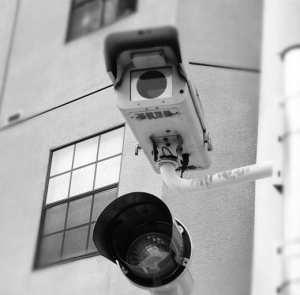 Private firms are selling spying tools and mass surveillance technologies to developing countries with promises that “off the shelf” equipment will allow them to snoop on millions of emails, text messages and phone calls, according to a cache of documents published on Monday.
The papers show how firms, including dozens from Britain, tout the capabilities at private trade fairs aimed at offering nations in Africa, Asia and the Middle East the kind of powerful capabilities that are usually associated with government agencies such as GCHQ and its US counterpart, the National Security Agency.
The market has raised concerns among human rights groups and ministers, who are poised to announce new rules about the sale of such equipment from Britain.
“The government agrees that further regulation is necessary,” a spokesman for the Department for Business, Innovation and Skills said. “These products have legitimate uses … but we recognise that they may also be used to conduct espionage.”
The documents are included in an online database compiled by the research watchdog Privacy International, which has spent four years gathering 1,203 brochures and sales pitches used at conventions in Dubai, Prague, Brasilia, Washington, Kuala Lumpur, Paris and London. Analysts posed as potential buyers to gain access to the private fairs.
The database, called the Surveillance Industry Index, shows how firms from the UK, Israel, Germany, France and the US offer governments a range of systems that allow them to secretly hack into internet cables carrying email and phone traffic.
The index has details from 338 companies, including 77 from the UK, offering a total of 97 different technologies.
One firm says its “massive passive monitoring” equipment can “capture up to 1bn intercepts a day”. Some offer cameras hidden in cola cans, bricks or children’s carseats, while one manufacturer turns cars or vans into surveillance control centres.
There is nothing illegal about selling such equipment, and the companies say the new technologies are there to help governments defeat terrorism and crime.
But human rights and privacy campaigners are alarmed at the sophistication of the systems, and worry that unscrupulous regimes could use them as tools to spy on dissidents and critics.
Libya’s former leader Muammar Gaddafi is known to have used off-the-shelf surveillance equipment to clamp down on opposition leaders.
Privacy International believes UK firms should now be subject to the same strict export licence rules faced by arms manufacturers.
“There is a culture of impunity permeating across the private surveillance market, given that there are no strict export controls on the sale of this technology, as there are on the sale of conventional weapons,” said Matthew Rice, research consultant with Privacy International.
Read more at The Guardian
Leave a Reply